Interoperability in Data Management: Unifying Healthcare Efforts

The field of healthcare has undergone remarkable advancements in recent years, with technology playing an essential role in reshaping how services are delivered. As the industry progresses, the significance of Interoperability in data management has become increasingly clear. Interoperability refers to the ability of diverse systems and devices to exchange and interpret data, which enables seamless communication and collaboration among healthcare professionals. In this article, we will delve into the critical importance of interoperability and its profound impact on the unification of the healthcare landscape.

Grasping the Concept of Interoperability in Healthcare

Interoperability forms the bedrock of efficient data management within the healthcare sector. It guarantees that various systems, including electronic health records (EHRs), medical devices, and other healthcare applications, can communicate effectively and share information in a uniform format. This seamless data flow not only enhances decision-making but also significantly improves patient care coordination and overall healthcare outcomes. By fostering an environment where information is readily accessible and interpretable, interoperability leads to better health services and benefits both patients and healthcare providers alike.

Exploring the Various Types of Interoperability in Healthcare

In the realm of healthcare, there are three primary types of interoperability that are crucial to understand:

  1. Foundational Interoperability: This level focuses on the basic exchange of data between different systems. It establishes the necessary technical compatibility that allows systems to communicate effectively. By laying the groundwork for further data exchange and collaboration, foundational interoperability plays a vital role in ensuring that healthcare professionals can access essential information when needed.

  2. Structural Interoperability: This type involves the standardization of data formats and the organisation of data elements within those formats. It ensures that information can be accurately interpreted and understood by receiving systems. By creating a common structural framework, healthcare professionals can easily access and interpret data, resulting in improved decision-making and enhanced patient care.

  3. Semantic Interoperability: Representing the highest level of interoperability, semantic interoperability focuses on the meaning of the data being exchanged. It enables systems to consistently understand and interpret information, regardless of its source or destination. This level of interoperability fosters accurate and meaningful clinical decision-making, allowing healthcare professionals to trust the reliability and consistency of the data they receive.

Understanding the Benefits of Interoperability in Healthcare

Adopting interoperability yields numerous advantages that significantly benefit healthcare providers, patients, and the broader healthcare ecosystem. Let us examine some key benefits:

  1. Improved Care Coordination: Interoperability allows healthcare professionals to access comprehensive patient information from various sources, leading to enhanced care coordination. With the capability to seamlessly exchange data, healthcare teams can develop a holistic view of patients’ healthcare journeys, which facilitates better-informed decisions and personalised care plans. This comprehensive approach not only enhances patient outcomes but also elevates patient satisfaction levels.

  2. Enhanced Patient Engagement: With the power of interoperability, patients can access their health records, lab results, and other pertinent information. This empowers them to actively participate in their own care, fostering a collaborative and engaged relationship between patients and providers. Through secure patient portals and mobile applications, individuals can conveniently manage and access their health information, enabling informed decisions regarding their well-being.

  3. Reduced Errors and Duplication: Interoperability significantly diminishes the chances of errors stemming from manual data entry or miscommunication. It minimises the duplication of tests and procedures, preserving valuable time and resources while preventing unnecessary expenses. With access to accurate and current patient information, healthcare professionals can make well-informed decisions about diagnosis, treatment plans, and medication management, consequently enhancing patient safety and care quality.

  4. Efficient Healthcare Delivery: By streamlining data exchange, interoperability eliminates the need for repetitive paperwork and manual processes. This improvement fosters operational efficiency and enables healthcare providers to devote more time to patient care. The automation of data exchange also alleviates the administrative burden, freeing up vital resources and allowing healthcare professionals to focus on delivering high-quality care and improving patient outcomes.

  5. Facilitates Research and Innovation: Interoperability enables the aggregation of large-scale clinical data, creating avenues for research, population health management, and breakthroughs in medical research and innovation. By securely sharing de-identified patient data, healthcare organisations can contribute to medical research, clinical trials, and the development of new treatments and therapies. This collaborative approach to data sharing promotes innovation and drives advancements within the healthcare sector.

Addressing Challenges in Achieving Interoperability

While the advantages of interoperability are substantial, implementing and achieving seamless data exchange can be fraught with challenges stemming from various factors. Let us explore some key obstacles:

  1. Lack of Standardization: The absence of widely accepted standards and protocols significantly hinders interoperability efforts. To tackle this challenge, industry stakeholders must collaborate to establish common standards and ensure their widespread acceptance. By promoting the use of standardised data formats, terminologies, and communication protocols, healthcare organisations can overcome barriers to interoperability and support efficient data exchange.

  2. Data Security and Privacy Concerns: As healthcare systems become increasingly interconnected, safeguarding the security and privacy of patient data is of utmost importance. Robust privacy measures, encryption techniques, and strict access controls must be implemented to protect sensitive information. Healthcare organisations must adopt comprehensive cybersecurity measures to shield patient data from unauthorised access, breaches, and cyber threats.

  3. Legacy Systems and Infrastructure: Many healthcare organisations continue to rely on legacy systems that lack the necessary capabilities for seamless interoperability. Upgrading these systems and investing in modern infrastructure is crucial to overcoming interoperability barriers. By adopting interoperable systems and technologies, healthcare organisations can ensure compatibility, facilitate data exchange, and promote seamless communication across different platforms.

  4. Cost and Resource Constraints: Implementing interoperability solutions often necessitates substantial financial investments and dedicated resources. Healthcare organisations must allocate appropriate budgets and personnel to drive interoperability initiatives effectively. Collaborative efforts among healthcare providers, government bodies, and technology vendors can aid in securing the funding and resources required to overcome interoperability challenges and achieve desired outcomes.

Anticipating the Future of Interoperability in Healthcare

As the healthcare industry continues to evolve, the significance of interoperability will become even more pronounced. Future advancements in technology, including the Internet of Medical Things (IoMT) and artificial intelligence (AI), will further highlight the necessity for seamless data exchange and interoperability. These emerging technologies have the potential to generate vast amounts of data that could transform healthcare delivery and patient outcomes. However, without effective interoperability, harnessing this data for meaningful insights and enhanced care will prove challenging.

To cultivate a unified healthcare ecosystem, it is crucial for stakeholders across the industry to collaborate in addressing challenges, establishing standards, and embracing interoperability as a fundamental principle. By doing so, healthcare providers can harness the power of data to deliver personalised, efficient, and patient-centred care. Interoperability will facilitate seamless data exchange, empower patients, reduce errors, enhance research capabilities, and drive innovation within the healthcare landscape.

In summary, interoperability plays a vital role in unifying healthcare through seamless data exchange and communication among various systems. It enhances care coordination, boosts patient engagement, minimises errors, and encourages innovation. Overcoming challenges such as standardisation, data security, legacy systems, and resource constraints is crucial for achieving effective interoperability. Looking ahead, the healthcare industry must continue to prioritise interoperability to unlock the full potential of technology in providing high-quality, patient-centric care.

Q1: What is interoperability in healthcare?
A1: Interoperability refers to the ability of different systems and devices in healthcare to exchange and interpret data, enabling seamless communication and collaboration among healthcare professionals.

Q2: What are the types of interoperability in healthcare?
A2: There are three primary types of interoperability in healthcare: foundational interoperability, structural interoperability, and semantic interoperability.

Q3: What are the benefits of interoperability in healthcare?
A3: Interoperability in healthcare brings forth numerous benefits, including improved care coordination, enhanced patient engagement, reduced errors and duplication, efficient healthcare delivery, and facilitation of research and innovation.

Q4: What challenges are associated with interoperability in healthcare?
A4: Some key challenges associated with interoperability in healthcare include lack of standardisation, data security and privacy concerns, legacy systems and infrastructure, and cost and resource constraints.

Originally posted 2024-06-18 18:28:32.

The post Interoperability in Data Management: Unifying Healthcare Efforts appeared first on Healthcare Marketing Service.

EHR’s Impact on Healthcare Data Management for the Future

In the rapidly changing realm of healthcare, the implementation of electronic health records (EHRs) has become an essential tool for managing patient information effectively. As technology advances, EHRs are crucial in shaping the future of healthcare by transforming data management. This article explores the significance of EHRs and their influence on the management of healthcare data.

Understanding Electronic Health Records (EHRs) for Better Patient Care

Electronic Health Records, widely known as EHRs, represent comprehensive digital documentation of patients’ health information. These records encompass a broad range of data, including medical history, medications, allergies, test results, and much more. EHRs provide a thorough overview of a patient’s health status, enabling healthcare professionals to make well-informed decisions and deliver timely, personalised care that meets individual patient needs.

The transition from traditional paper-based records to digital EHRs has revolutionised the way healthcare providers manage patient information. With instant access to patient data, healthcare professionals can swiftly retrieve critical information, thereby enhancing their efficiency. This shift eliminates the cumbersome nature of physical records, enabling providers to concentrate more on delivering quality patient care and improving overall patient outcomes.

Furthermore, EHRs support seamless integration and sharing of patient data across diverse healthcare settings, thus promoting data interoperability. This interoperability fosters enhanced communication among healthcare professionals and facilitates coordinated care, significantly reducing the potential for medical errors arising from incomplete or inaccurate information.

Exploring the Benefits of EHRs in Healthcare Data Management

Doctors using advanced EHR systems on glowing interfaces to manage patient data in a futuristic healthcare setting.
  1. Streamlined Accessibility and Enhanced Efficiency: EHRs provide immediate access to patient data, effectively eliminating the reliance on physical paper records. This newfound accessibility greatly improves the efficiency of healthcare providers, enabling them to retrieve vital information swiftly, ultimately leading to better patient outcomes.

    - Healthcare providers can access patient records remotely, facilitating quick decision-making and timely interventions.
    
    • EHRs reduce the time spent searching for information, allowing healthcare professionals to dedicate more time to patient care.
  2. Seamless Data Integration and Interoperability: EHRs enable the effortless integration and sharing of patient data across various healthcare settings. This interoperability enhances communication among healthcare professionals, allowing for coordinated and comprehensive care. Additionally, it minimises the risk of medical errors stemming from incomplete or inaccurate information.

    - EHRs promote collaboration among healthcare providers by offering a central repository for patient data, ensuring that all parties have access to the same information.
    
    • Interoperability between EHR systems ensures efficient data transfer, reducing unnecessary duplication of tests and procedures.
  3. Boosting Patient Safety: EHRs significantly promote patient safety by minimising medication errors and adverse events. Through features like drug interaction alerts, allergy notifications, and dosage recommendations, EHRs empower healthcare providers to make safer, more informed decisions.

    - EHRs provide real-time alerts and reminders, assisting healthcare professionals in avoiding potential medication errors and adverse events.
    
    • The integration of decision support tools within EHRs aids in accurate medication prescribing, effectively reducing the risk of adverse drug events.
  4. Facilitating Enhanced Decision-Making: EHRs offer real-time access to a patient’s extensive medical history, test results, and treatment plans. This comprehensive information equips healthcare professionals with a complete understanding of the patient’s health, aiding in the accurate diagnosis and development of effective treatment strategies.

    - EHRs enable healthcare professionals to view a patient's entire medical history, empowering them to make informed decisions based on complete data.
    
    • Access to real-time data allows for timely interventions, preventing delays in diagnosis and treatment.
  5. Streamlined Clinical Documentation: EHRs simplify the documentation process by automating tasks such as capturing patient vitals, generating progress notes, and documenting procedures. This automation not only saves valuable time for healthcare professionals but also ensures that patient records are accurate and comprehensive.

    - Automated documentation reduces the risk of errors and omissions in patient records, ensuring accurate and up-to-date information is consistently available.
    
    • Standardised templates and forms in EHRs enhance the consistency and completeness of clinical documentation practices.

The Impact of EHRs on Healthcare Data Management

  1. Efficient Data Storage and Organisation: EHRs act as a centralised repository for patient data, effectively replacing traditional paper-based records. These digital records facilitate the efficient storage, organisation, and retrieval of vast volumes of healthcare data. Healthcare providers can search for specific information, monitor changes over time, and analyse data trends to tailor patient care effectively.

    - EHRs empower healthcare providers to securely store extensive patient data, reducing the need for physical storage and minimising the risk of data loss.
    
    • Search functionalities within EHRs enable quick retrieval of specific information, significantly improving data management efficiency.
  2. Robust Data Security and Privacy Protections: EHRs incorporate stringent security measures to safeguard patient data against unauthorised access or breaches. Advanced encryption protocols, user authentication processes, and detailed audit trails ensure the confidentiality and integrity of patient information. Adherence to data protection regulations, such as the Health Insurance Portability and Accountability Act (HIPAA), further reinforces patient privacy.

    - EHRs utilise encryption techniques to protect patient data from unauthorised access, ensuring the confidentiality of sensitive information.
    
    • User authentication protocols guarantee that only authorised individuals can access patient records, significantly reducing the risk of data breaches.
  3. Advancing Data Analytics and Research Capabilities: EHRs contribute to healthcare progress through data analytics and research initiatives. Aggregated and de-identified patient data stored within EHR systems can be analysed to identify patterns, trends, and outcomes. This valuable information supports clinical research, population health management, and the creation of evidence-based practices to enhance care delivery.

    - EHRs provide a rich source of data that can be analysed to discern population health trends and formulate targeted interventions.
    
    • Researchers can utilise EHR data to conduct extensive studies and generate evidence to inform clinical practices.
  4. Facilitating Telehealth Services and Remote Monitoring: EHRs are instrumental in enabling telehealth services and remote patient monitoring capabilities. With EHR integration, healthcare professionals can access patient data remotely, conduct virtual consultations, and monitor vital signs effectively. This functionality broadens access to healthcare, particularly for individuals residing in remote areas or those with limited mobility.

    - EHRs allow healthcare providers to remotely monitor patients' health conditions, facilitating early detection of abnormalities and timely interventions.
    
    • Telehealth services integrated with EHRs enhance healthcare access for patients who encounter barriers to in-person visits, such as those living in rural regions.
  5. Empowering Patients Through Engagement: EHRs enable patients to take an active role in their healthcare journey. Through patient portals, individuals can access their health records, review test results, schedule appointments, and communicate with their healthcare providers. This heightened engagement fosters a collaborative approach to healthcare, ultimately leading to improved patient satisfaction and outcomes.

    - Patient portals integrated into EHRs allow patients to access their health information, empowering them to take ownership of their health and make informed choices.
    
    • Communication features within EHRs facilitate secure messaging between patients and healthcare providers, strengthening the patient-provider relationship.

Looking Ahead: The Future of Healthcare with EHRs

The future of healthcare is being profoundly influenced by the integration and effective utilisation of electronic health records (EHRs) in managing healthcare data. EHRs present a multitude of advantages in terms of accessibility, efficiency, patient safety, and decision-making capabilities. They function as a central repository for patient information, ensuring secure storage, organisation, and retrieval of health data. With the potential to enhance data analytics, support telehealth services, and promote patient engagement, EHRs are fundamentally transforming healthcare delivery and improving patient outcomes. Embracing this innovative technology and utilising it efficiently will be vital for healthcare providers in crafting a more efficient and patient-focused future.

Frequently Asked Questions about EHRs

A digital interface showing an electronic health record with graphs and data, accessed by healthcare professionals.
  1. What are Electronic Health Records (EHRs)?
  • Electronic Health Records, commonly referred to as EHRs, are comprehensive digital records of patients’ health information. They encompass a wide array of data, including medical history, medications, allergies, test results, and more.
  1. How do EHRs improve healthcare data management?
  • EHRs enhance healthcare data management by providing instant access to patient data, eliminating the reliance on physical paper records. They also facilitate seamless integration and sharing of patient data across various healthcare settings, promoting data interoperability.
  1. How do EHRs enhance patient safety?
  • EHRs enhance patient safety by reducing medication errors and adverse events. They provide real-time alerts and reminders that assist healthcare professionals in avoiding potential medication errors and adverse situations. The integration of decision support tools in EHRs aids in accurate medication prescribing, effectively reducing the risk of adverse drug events.
  1. How do EHRs contribute to efficient clinical documentation?
  • EHRs streamline the documentation process by automating tasks such as capturing patient vitals, generating progress notes, and documenting procedures. This automation saves time for healthcare professionals while ensuring the accuracy and completeness of patient records.

Originally posted 2024-04-12 12:13:36.

The post EHR’s Impact on Healthcare Data Management for the Future appeared first on Healthcare Marketing Service.

Data Security in Healthcare Data Management: A Crucial Focus

In the contemporary digital landscape, data security has emerged as an increasingly vital issue, particularly within the healthcare sector. With rapid technological advancements and the growing digitisation of patient records, maintaining the confidentiality, integrity, and availability of healthcare data is of utmost importance. This article explores the critical importance of data security in healthcare data management while examining various strategies that can be employed to protect sensitive patient information effectively.

Recognising the Critical Importance of Data Security in the Healthcare Sector

The healthcare industry manages an extensive array of sensitive data, encompassing patient medical records, personal details, and financial information. Safeguarding this data from unauthorised access, theft, or misuse is essential for ensuring patient privacy and averting potential security breaches. Implementing robust data security measures in healthcare data management offers numerous benefits, which include:

  1. Ensuring Patient Privacy: Effective data security protocols guarantee that patients’ personal information remains confidential, thereby preserving their trust in healthcare providers and institutions. By establishing and enforcing stringent data protection measures, healthcare organisations can build a solid foundation of trust and maintain the privacy of patient data.

  2. Adhering to Regulatory Compliance: Healthcare organisations are required to comply with a variety of data protection regulations, such as the Health Insurance Portability and Accountability Act (HIPAA) in the United States. Implementing comprehensive data security measures is essential for meeting these regulatory standards. By ensuring compliance, healthcare organisations can avoid legal repercussions and uphold the trust of their patients.

  3. Mitigating the Risk of Data Breaches: Data breaches not only jeopardise patient privacy but can also result in significant financial losses, reputational harm, and legal consequences. By instituting robust security measures, healthcare organisations can significantly minimise the risk of data breaches and their associated ramifications. Effectively preventing data breaches safeguards the financial stability, reputation, and overall viability of healthcare organisations.

  4. Safeguarding Data Integrity: Ensuring the accuracy and consistency of healthcare data is essential for delivering high-quality patient care. Data security measures play a critical role in maintaining data integrity, preventing unauthorised modifications or tampering. By preserving the integrity of healthcare data, organisations can provide reliable and trustworthy information necessary for making informed decisions regarding patient care.

Implementing Robust Data Security Measures for Effective Healthcare Data Management

A secure healthcare data center with encrypted servers and biometric access controls protecting patient information.
  1. Data Encryption Techniques: Encrypting healthcare data is a fundamental step in protecting sensitive information. Encryption converts data into an unreadable format that can only be decrypted with the appropriate key, effectively preventing unauthorised access. This technology ensures that even if data is intercepted, it remains secure and inaccessible to those without the proper authorisation.

  2. Strict Access Control Protocols: Implementing stringent access controls ensures that only authorised personnel can access patient data. This encompasses user authentication mechanisms, role-based access controls, and regular audits of user accounts. By employing effective access control strategies, healthcare organisations can limit exposure to sensitive data and thwart unauthorised access.

  3. Advanced Firewalls and Intrusion Detection Systems: Deploying robust firewalls and intrusion detection systems is essential for monitoring network traffic, preventing unauthorised access, and detecting potential security breaches in real-time. These security measures act as a protective barrier against external threats and provide immediate alerts for any suspicious activities within the network.

  4. Consistent Data Backup Procedures: Regularly backing up healthcare data is crucial for disaster recovery, ensuring that information can be restored in the event of a security incident or system failure. By maintaining frequent backups, healthcare organisations can mitigate the impact of data loss and efficiently restore critical information when necessary.

  5. Comprehensive Employee Training and Awareness: Healthcare organisations must conduct regular training sessions to educate employees about data security best practices. Staff members should be well-informed about phishing threats, password hygiene, and secure handling of sensitive information. By investing in employee education, healthcare organisations can foster a culture of security awareness, empowering their workforce to actively participate in data protection.

  6. Robust Endpoint Security Solutions: Securing endpoints, such as computers, laptops, and mobile devices, is essential to prevent unauthorised access to healthcare data. Endpoint security solutions include antivirus software, firewalls, and encryption techniques. By implementing comprehensive endpoint security measures, healthcare organisations can protect data at its source and avert potential breaches caused by compromised devices.

  7. Thorough Vendor Management Practices: Healthcare organisations frequently rely on third-party vendors for various services. It is vital to ensure that these vendors adhere to stringent data security standards and possess robust security measures. By meticulously vetting and monitoring vendors, healthcare organisations can mitigate risks associated with outsourcing and maintain the security of patient data.

  8. Regular Security Audits and Assessments: Conducting periodic security audits is crucial for identifying vulnerabilities in data management systems and ensuring compliance with security policies and regulations. These audits provide valuable insights into potential weaknesses, enabling timely implementation of corrective measures and strengthening the overall security posture of healthcare organisations.

Leveraging Artificial Intelligence (AI) to Enhance Data Security in Healthcare

Artificial Intelligence (AI) is transforming numerous industries, including healthcare data security. AI-driven solutions can significantly enhance data security in various ways:

  1. Real-time Threat Detection: AI algorithms can analyse extensive datasets to identify potential security threats or anomalies in real time, allowing for proactive measures to be implemented swiftly. By harnessing AI for threat detection, healthcare organisations can stay one step ahead of cybercriminals, effectively preventing security breaches before they escalate.

  2. User Behavioural Analytics: AI can examine user behaviour patterns to detect any suspicious activities, such as attempts for unauthorised access or data breaches. By continuously monitoring user interactions, AI systems can identify abnormal patterns and trigger alerts, enabling prompt action to avert data breaches and unauthorised access.

  3. Automated Incident Response Mechanisms: AI systems can automate processes involved in incident response, facilitating rapid containment, mitigation, and recovery from security incidents. By automating these responses, healthcare organisations can reduce response times, minimise the impact of security incidents, and ensure seamless business continuity.

  4. Predictive Analytics for Risk Management: AI algorithms can forecast potential security risks by analysing historical data, assisting organisations in implementing preventive measures to decrease the likelihood of security breaches. By employing predictive analytics, healthcare organisations can proactively identify vulnerabilities and take preemptive actions to fortify their security framework.

Prioritising Data Security: A Necessity for the Future of Healthcare

Data security is an integral component of healthcare data management. It ensures the protection of patient privacy, compliance with regulations, and the prevention of data breaches. By implementing effective data security measures, such as encryption, access controls, regular backups, and ongoing employee training, healthcare organisations can adequately protect sensitive patient information. The incorporation of AI-driven solutions further enhances data security by facilitating real-time threat detection, behavioural analytics, automated incident response, and predictive analytics. By prioritising data security, healthcare organisations not only protect patients but also preserve the reputation and sustainability of their institutions in an increasingly digital landscape.

Frequently Asked Questions (FAQ)

A digital fortress protecting medical records with encryption and firewalls, ensuring patient privacy and data integrity in healthcare.

1. Why is data security crucial in healthcare data management?
Data security is essential in healthcare data management to protect patient privacy, comply with regulations, prevent data breaches, and maintain data integrity.

2. What are some effective data security measures for healthcare data management?
Effective data security measures for healthcare data management include encryption, access controls, firewalls, intrusion detection systems, regular data backups, employee training and awareness, endpoint security, vendor management, and regular security audits.

3. How does artificial intelligence (AI) enhance data security in healthcare?
AI enhances data security in healthcare by enabling real-time threat detection, behavioural analytics, automated incident response, and predictive analytics. AI algorithms can analyse data instantaneously, detect suspicious activities, automate incident response processes, and anticipate potential security risks.

4. What benefits arise from prioritising data security in healthcare?
Prioritising data security in healthcare protects patient privacy, ensures compliance with regulations, prevents financial losses and reputational damage from data breaches, and provides reliable information for informed decision-making regarding patient care.

Originally posted 2023-07-13 09:42:26.

The post Data Security in Healthcare Data Management: A Crucial Focus appeared first on Healthcare Marketing Service.

Interoperability in Healthcare Data Management: A New Era

In the current, swiftly evolving landscape of healthcare, the concept of Interoperability has surfaced as a vital component in the realm of effective data management. With the ongoing digital transformation, healthcare providers are increasingly depending on the seamless exchange of information to enhance patient care, boost operational efficiency, and foster innovation. This article delves into the intricacies of interoperability and highlights its profound significance in managing healthcare data.

Understanding the Importance of Interoperability in Healthcare

Interoperability is defined as the capability of diverse systems or software applications to exchange and utilise data in a meaningful and efficient manner. Within the healthcare sector, this entails the secure and smooth sharing of patient information across various platforms, technologies, and organisations. By enabling interoperability, healthcare providers gain access to essential data from myriad sources, which facilitates informed decision-making, enhances care coordination, and ultimately improves patient outcomes.

However, interoperability in healthcare transcends the mere exchange of data; it encompasses the harmonisation of systems, protocols, and standards needed to ensure that information is comprehensible and actionable by different healthcare entities. This includes the integration of data from electronic health record (EHR) systems, medical devices, telehealth platforms, and other digital health technologies, thereby fostering a comprehensive approach to healthcare delivery.

Why Interoperability is Essential for Effective Healthcare Data Management

  1. Improved Care Coordination for Enhanced Patient Outcomes: Interoperability enables healthcare providers to share patient information effortlessly, ensuring that all caregivers have access to up-to-date and comprehensive data. This interconnectedness enhances care coordination, ultimately leading to superior patient outcomes and a reduction in medical errors.

With interoperable systems in place, healthcare professionals can obtain a holistic view of a patient’s medical history, current treatment plans, and medication lists. Such comprehensive access allows them to make informed decisions and collaborate effectively with other providers involved in the patient’s care, significantly improving overall care coordination. Better coordination not only leads to enhanced patient outcomes but also results in decreased hospital readmissions and lower healthcare costs over time.

  1. Streamlining Workflow for Greater Efficiency: Interoperability simplifies data exchange between different healthcare systems, thereby eliminating the need for manual data entry or redundant processes. This efficiency not only saves time but also alleviates the administrative burden on healthcare professionals, allowing them to concentrate more on patient care.

Through the implementation of interoperable systems, healthcare providers can automate data exchange, removing the necessity for repetitive tasks such as faxing or scanning documents. This automation leads to improved workflow efficiency, a reduction in errors associated with manual data entry, and frees up valuable time for healthcare professionals to devote to patient interactions and care.

  1. Empowering Patients through Access to Their Health Information: By facilitating patients’ access to their own health information, interoperability cultivates patient engagement and empowerment. Patients can take an active role in their care decisions, monitor their health status, and collaborate with healthcare providers to achieve better health outcomes.

Interoperable systems empower patients by granting them access to their medical records, test results, and treatment plans. This transparency allows patients to take ownership of their health and actively engage in shared decision-making with their healthcare providers. Furthermore, patients can utilise health apps and wearable devices to track their vital signs, set health goals, and receive personalised recommendations for managing their conditions, thereby enhancing their overall health management.

  1. Driving Research and Innovation through Data Access: Interoperable systems enable researchers and innovators to tap into a vast reservoir of health data, accelerating medical research and advancements. This accessibility facilitates the aggregation and analysis of data from diverse sources, yielding valuable insights, personalised treatments, and the development of new therapies.

Interoperability is pivotal in propelling medical research and innovation. By synthesising data from various sources, researchers can obtain a comprehensive understanding of diseases, treatment outcomes, and population health trends. This rich data pool can lead to the discovery of new therapies, the identification of risk factors, and significant advancements in precision medicine, ultimately benefiting the healthcare ecosystem.

Exploring the Different Types of Interoperability in Healthcare

Interoperability within healthcare can be classified into three primary levels:

  1. Foundational Interoperability: This level addresses the basic exchange of data without any interpretation or comprehension. It guarantees that data can be transmitted from one system to another without loss or distortion.

Foundational interoperability establishes the necessary technical capabilities for data exchange between systems. It involves using standardised data formats, protocols, and communication standards to ensure compatibility among various healthcare technologies. While foundational interoperability is essential for the smooth transmission of data, it does not account for the semantic meaning or interpretation of the data.

  1. Structural Interoperability: This level focuses on defining the format and structure of exchanged data. It establishes a common language and standardisation, allowing systems to interpret and process data accurately.

Building upon foundational interoperability, structural interoperability emphasises the organisation and formatting of data. It necessitates the adoption of standardised terminologies, codes, and data models to ensure that information is comprehensible and processable by different systems. This level of interoperability facilitates the exchange of data with consistent meaning and structure, thus promoting successful data integration and analysis.

  1. Semantic Interoperability: As the highest level of interoperability, semantic interoperability transcends data exchange and focuses on the meaning and understanding of the information. It enables the seamless interpretation and application of data across different systems while ensuring that the context and intent of the data remain intact.

The goal of semantic interoperability is to establish a shared understanding of data through the utilisation of standardised vocabularies, ontologies, and clinical terminologies. This level of interoperability allows systems to share data in a meaningful and clinically relevant manner, empowering healthcare professionals to extract valuable insights and make informed decisions. It is crucial for advanced analytics, decision support systems, and effective management of population health.

Identifying the Challenges and Barriers to Achieving Interoperability

While interoperability offers myriad benefits to healthcare data management, several challenges and barriers hinder its widespread adoption:

  1. The Challenge of Standardisation in Data Exchange: The lack of universally accepted standards for data exchange presents a significant obstacle to achieving interoperability. Diverse data formats, terminologies, and coding systems complicate the accurate exchange and interpretation of information.

The absence of standardisation in healthcare data constitutes a major hurdle to interoperability. Different healthcare organisations, vendors, and systems frequently employ proprietary data formats, terminologies, and coding systems that are incompatible with one another. This discrepancy complicates the seamless exchange of data and the integration of information from multiple sources. Ongoing efforts aim to develop and promote the adoption of standardised data exchange formats, such as HL7 and FHIR, to mitigate this challenge.

  1. Addressing Security and Privacy Concerns: The pursuit of interoperability raises significant concerns regarding the security and privacy of sensitive patient data. Healthcare organisations must implement robust security measures and comply with strict privacy regulations to safeguard patient information against unauthorised access or breaches.

As healthcare data becomes increasingly interconnected, the risk of data breaches and unauthorised access escalates. Interoperability necessitates strong security protocols, including encryption, access controls, and audit trails, to protect patient data during both transmission and storage. Additionally, healthcare organisations must adhere to privacy regulations, such as HIPAA, to ensure patient confidentiality and foster trust in interoperable systems.

  1. Integration Challenges with Legacy Systems: Many healthcare institutions continue to rely on outdated legacy systems that lack interoperability capabilities. The process of integrating these antiquated systems with modern, interoperable technologies can be both complex and costly, thereby hindering the seamless exchange of data.

Legacy systems, such as older EHR systems or medical devices, often do not possess the necessary interoperability features to facilitate data exchange with other systems. Upgrading or replacing these systems to achieve interoperability presents a significant challenge for healthcare organisations due to the associated costs, technical complexities, and potential disruptions to existing workflows. Interoperability initiatives must consider the integration needs of legacy systems to promote widespread adoption.

  1. Overcoming Resistance to Change in Healthcare Culture: Implementing interoperable systems necessitates a cultural shift within healthcare organisations. Resistance to change, coupled with a lack of awareness and reluctance to adopt new technologies, can obstruct progress towards achieving interoperability goals.

Resistance to change remains a common barrier to the implementation of interoperable systems. Healthcare professionals may hesitate to embrace new technologies or workflows due to apprehensions regarding increased workloads, unfamiliarity with new systems, or perceived disruptions to established practices. To overcome this resistance, it is essential to employ education, training, and effective change management strategies that demonstrate the value and benefits of interoperability to healthcare providers.

The Promising Future of Interoperability in Healthcare

A futuristic healthcare network with interconnected systems and vibrant data streams integrated through glowing API nodes.

Despite the challenges that lie ahead, the future of interoperability in healthcare appears optimistic. As technology continues to evolve, interoperability will be instrumental in shaping the future landscape of healthcare. Below are some key trends and developments to keep an eye on:

  1. Leveraging Application Programming Interfaces (APIs): APIs facilitate the smooth integration and exchange of data between various applications or systems. By harnessing the power of APIs, healthcare organisations can enhance interoperability and enable the secure sharing of patient information.

APIs offer a standardised approach for diverse healthcare systems to communicate and exchange data effectively. They enable the development of interoperable applications, such as patient portals, telehealth platforms, and population health management tools. Furthermore, APIs allow third-party developers to create innovative solutions that integrate with existing healthcare systems, fostering a dynamic ecosystem of interoperable technologies.

  1. Utilising Blockchain Technology for Secure Data Management: Blockchain has the potential to transform healthcare data management by ensuring secure and transparent transactions. Its decentralised nature, immutability, and data integrity features can address privacy concerns while promoting interoperability.

Blockchain technology provides a decentralised and tamper-proof framework for storing and sharing healthcare data. It offers a secure and transparent mechanism for recording transactions, ensuring data integrity, and safeguarding patient privacy. By enabling patients to retain control over their health data and granting permission to healthcare providers for accessing specific information, blockchain facilitates interoperability while ensuring data security and patient consent.

  1. Advancements in Artificial Intelligence (AI) and Machine Learning: AI and machine learning algorithms can automate data integration, interpretation, and analysis. These technologies can facilitate faster and more accurate information exchanges, enabling improved decision-making and personalised care.

AI and machine learning hold the potential to revolutionise healthcare data management and interoperability. These technologies can automate data extraction, cleansing, and integration from disparate sources, thereby reducing manual efforts and enhancing data quality. AI algorithms can also analyse large datasets to identify patterns, predict outcomes, and support clinical decision-making. By leveraging AI and machine learning, interoperable systems can provide personalised care recommendations, early disease detection, and valuable insights into population health.

  1. Government Initiatives and Regulatory Support: Governments around the world are increasingly recognising the importance of interoperability and are establishing regulations to encourage its adoption. Initiatives such as Health Information Exchange (HIE) and Fast Healthcare Interoperability Resources (FHIR) are driving the standardisation and interoperability agenda.

Government support plays a crucial role in advancing interoperability initiatives. Numerous countries have enacted policies, regulations, and incentives aimed at promoting the adoption of interoperable systems. For instance, Health Information Exchange (HIE) initiatives seek to create interconnected healthcare systems for seamless data sharing. The Fast Healthcare Interoperability Resources (FHIR) standard provides a framework for exchanging healthcare information using modern web technologies. These initiatives, coupled with government funding and collaborative efforts, are propelling the adoption of interoperability in healthcare.

Ultimately, interoperability has emerged as a transformative force in healthcare data management, revolutionising the manner in which patient information is exchanged and utilised. It enhances care coordination, boosts workflow efficiency, empowers patients, and stimulates research and innovation. By overcoming existing challenges and leveraging emerging technologies, the continued adoption of interoperability will significantly enhance healthcare delivery and outcomes.

Please note that this revised version expands upon the original draft, adding detailed paragraphs, bullet points, and lists to enrich the content.

Frequently Asked Questions about Interoperability

1. How is Interoperability Defined in Healthcare?

Interoperability refers to the ability of diverse systems or software applications to exchange and effectively utilise data within the healthcare context. This encompasses the secure and seamless sharing of patient information across various platforms, technologies, and organisations.

2. What Benefits Does Interoperability Offer for Healthcare Data Management?

A digital network of healthcare systems exchanging patient data, enhancing care and empowering patients.

Interoperability in healthcare data management provides several advantages, including enhanced care coordination, streamlined workflow, increased patient empowerment, and the facilitation of research and innovation.

3. What Are the Three Main Levels of Interoperability in Healthcare?

The three main levels of interoperability in healthcare are foundational interoperability, structural interoperability, and semantic interoperability. Foundational interoperability focuses on basic data exchange, while structural interoperability defines the format and structure of the exchanged data. Semantic interoperability transcends mere data exchange and centres on the meaning and understanding of the information.

4. What Challenges and Barriers Exist to Achieving Interoperability in Healthcare?

Challenges and barriers to interoperability in healthcare include a lack of standardisation, concerns regarding data security and privacy, the prevalence of legacy systems and infrastructure, and resistance to change. These factors hinder the widespread implementation of interoperable systems.

Originally posted 2023-06-12 02:21:15.

The post Interoperability in Healthcare Data Management: A New Era appeared first on Healthcare Marketing Service.
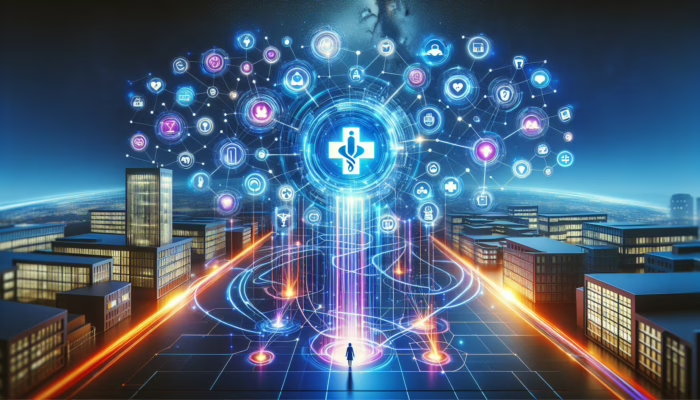
BPO Services Transforming Healthcare Data Management Futures

The healthcare industry has undergone a remarkable transformation in recent years, largely propelled by technological advancements and the pressing need for more efficient healthcare data management. A primary catalyst for this evolution is the growing adoption of Business Process Outsourcing (BPO) services within the healthcare domain. These BPO services have emerged as a revolutionary force, fundamentally changing how healthcare data is managed, processed, and utilized, leading to improved operational efficiency and enhanced patient care.

Understanding the Role of BPO Services in Healthcare Operations

BPO services in healthcare encompass the outsourcing of specific business functions or processes to specialized third-party service providers. In the healthcare context, these services involve delegating various non-core administrative tasks to expert vendors. Such tasks may include medical billing, coding, claims processing, data entry, medical transcription, appointment scheduling, and numerous other administrative functions that do not involve direct patient interaction.

By outsourcing these non-patient-facing functions to BPO service providers, healthcare organizations can redirect their resources towards delivering high-quality patient care. The efficiency and cost-effectiveness inherent in BPO services make them a compelling choice for healthcare providers aiming to streamline operations and boost overall productivity.

Unlocking the Benefits of BPO Services in Healthcare Data Management

BPO experts managing healthcare data on computers in a modern office, ensuring accuracy with medical symbols.
  1. Achieving Superior Data Accuracy and Quality

In the healthcare landscape, maintaining accurate and high-quality data is essential. BPO services bring in proficient professionals who are adept in best practices of data management. These experts meticulously capture, organize, and validate healthcare data, significantly minimizing errors and discrepancies. By utilizing their expertise, BPO service providers empower healthcare organizations to maintain databases that are not only reliable but also consistently up-to-date.

Moreover, BPO providers leverage advanced technologies and automated tools to further enhance data accuracy and quality. These sophisticated tools are capable of identifying and rectifying errors, validating data against stringent industry standards, and ensuring uniformity across various systems and platforms, thereby enhancing the overall integrity of healthcare data.

  1. Strengthening Data Security and Compliance

Ensuring data security and regulatory compliance is paramount in the healthcare sector. BPO service providers adhere rigorously to security protocols and comply with critical industry regulations such as the Health Insurance Portability and Accountability Act (HIPAA). They implement robust data protection strategies, including secure file transfer protocols, data encryption, and stringent access controls, all designed to safeguard sensitive patient information. This commitment enables healthcare organizations to handle patient data with confidence, significantly reducing the risk of data breaches and unauthorized access.

Furthermore, BPO providers conduct regular security audits and assessments to identify any vulnerabilities, promptly implementing necessary measures to address them. By staying updated with the latest trends and technologies in security, they ensure that healthcare data remains secure amidst an ever-evolving threat landscape.

  1. Realizing Increased Cost-efficiency

Outsourcing non-core administrative tasks to BPO service providers can lead to substantial reductions in operational costs for healthcare providers. The expenses associated with hiring and training in-house staff for administrative roles can be overwhelming and time-consuming. In contrast, BPO services present a cost-effective alternative by providing access to skilled professionals at significantly lower costs. This allows healthcare organizations to strategically allocate their resources and invest more in areas that have a direct impact on patient care.

Additionally, BPO services offer scalability in resource allocation. Healthcare organizations can adjust their operations based on fluctuating demand, eliminating the need to hire or let go of staff. This flexibility ensures efficient resource utilization, minimizing waste while maximizing productivity across the board.

  1. Enhancing Scalability and Flexibility

As healthcare organizations grow or encounter varying workloads, BPO services facilitate the necessary flexibility to scale operations accordingly. Whether it involves managing an unexpected surge in medical claims or addressing increased data entry demands, BPO service providers possess the infrastructure and expertise to adapt swiftly. Their capability to manage fluctuating volumes of work ensures that healthcare providers can maintain consistent service levels without sacrificing quality.

BPO service providers also seamlessly integrate with existing healthcare systems and platforms. This interoperability fosters smooth data exchange and collaboration among different stakeholders, ultimately improving operational efficiency and coordination throughout the organization.

  1. Redirecting Focus to Core Competencies

By outsourcing non-core administrative functions, healthcare organizations can concentrate on their primary competencies, such as patient care, research, and innovation. BPO services alleviate the burden of time-consuming administrative tasks, enabling healthcare professionals to devote their expertise and efforts to delivering the highest standard of care possible. This shift not only elevates patient satisfaction levels but also enhances the reputation and competitiveness of healthcare organizations in the market.

Moreover, BPO service providers offer valuable insights and recommendations drawn from their extensive experience in healthcare data management. They can identify trends, patterns, and opportunities for process improvement, empowering healthcare organizations to continuously refine their operations and achieve better patient outcomes.

Exploring the Future of Healthcare Data Management with BPO Services

The integration of BPO services into healthcare data management has already demonstrated significant advantages. However, the future brims with even more potential for growth and innovation. Here are some emerging trends expected to shape the future of healthcare data management through BPO services:

  1. Leveraging Advanced Automation and Artificial Intelligence (AI)

Innovations in automation and AI technologies are set to revolutionize healthcare data management. BPO service providers are increasingly harnessing these technologies to amplify the speed and accuracy of data processing. AI algorithms can analyze medical records, extract relevant information, and automate repetitive tasks, thereby minimizing manual effort and enhancing operational efficiency. This not only conserves time but also allows healthcare organizations to glean valuable insights from extensive data sets.

With the integration of AI, BPO service providers can create predictive models that identify potential health risks, optimize treatment plans, and enhance patient outcomes. This proactive approach to healthcare management has the potential to transform the delivery of care and significantly improve patient health results.

  1. Utilizing Predictive Analytics for Enhanced Decision-making

As healthcare data becomes increasingly abundant, BPO service providers are poised to play a critical role in extracting actionable insights through predictive analytics. By analyzing historical data trends, BPO services can assist healthcare organizations in making informed decisions related to patient care, resource allocation, and the identification of potential health risks. Predictive analytics will empower healthcare providers to deliver personalized care, optimize treatment strategies, and enhance patient outcomes.

BPO service providers can also leverage predictive analytics to identify trends and patterns within healthcare data, facilitating proactive interventions and preventive measures. By recognizing high-risk patients and forecasting potential health issues, healthcare organizations can take preemptive actions to avert adverse events and ensure timely interventions.

  1. Establishing Interoperability and Data Exchange

BPO services will be instrumental in establishing seamless interoperability and data exchange across diverse healthcare systems. They will facilitate the integration of various data sources, including electronic health records (EHRs), insurance claims, and medical imaging, ensuring comprehensive and unified access to patient information. This level of interoperability empowers healthcare professionals with a holistic view of patient health, promoting better care coordination and minimizing medical errors.

Through the use of standardized data formats and protocols, BPO service providers can enable seamless data exchange among different healthcare systems and platforms. They can also implement data governance frameworks to ensure data quality, consistency, and security across the entire healthcare ecosystem. By dismantling data silos and facilitating data interoperability, BPO services can enhance collaboration and information sharing among healthcare providers, ultimately leading to improved patient outcomes.

  1. Implementing Blockchain for Secure and Transparent Data Management

The adoption of blockchain technology holds tremendous promise for healthcare data management. BPO service providers can utilize blockchain to ensure secure and transparent data sharing, bolster data integrity, and enhance privacy. Blockchain-enabled systems facilitate secure access to patient records, prevent unauthorized alterations, and maintain an auditable record of data transactions. This technology can transform healthcare data management by enabling secure information sharing among patients, healthcare providers, and insurance companies.

With blockchain, BPO service providers can establish an immutable ledger that documents every transaction, ensuring data integrity. This eliminates the reliance on intermediaries and enhances trust in data exchanges. Furthermore, blockchain technology empowers patients to maintain greater control over their health data, allowing them to grant or revoke access as needed. This capability enables patients to actively participate in their healthcare decisions while ensuring their data is handled securely and transparently.

Harnessing the Full Potential of BPO Services in Healthcare Data Management

The incorporation of BPO services into healthcare data management has unveiled numerous advantages for healthcare organizations. From enhanced data accuracy and security to increased cost-efficiency and scalability, BPO services present a strategic solution for optimizing administrative operations. As technology continues to advance, BPO services will undeniably shape the future of healthcare data management, enabling improved decision-making, interoperability, and secure data exchange. Embracing BPO services is not only a prudent business decision but also a critical step towards unlocking the full potential of healthcare in the digital era.

Note: The content provided above is generated by an AI language model and may require further editing and revision to align with specific guidelines and requirements.

Frequently Asked Questions about BPO Services in Healthcare

Diverse healthcare BPO staff working, answering calls, and reviewing documents with FAQs on a large screen.

1. What are BPO services in healthcare?

BPO services in healthcare refer to the outsourcing of specific business functions or processes to third-party service providers. These services can encompass a variety of tasks such as medical billing, coding, claims processing, data entry, and appointment scheduling.

2. What are the benefits of BPO services in healthcare data management?

The benefits of BPO services in healthcare data management include improved data accuracy and quality, enhanced data security and compliance, increased cost-efficiency, scalability and flexibility, as well as enabling healthcare organizations to concentrate on their core competencies.

3. How can BPO services improve data accuracy and quality in healthcare?

A modern BPO office with healthcare professionals using advanced technology to validate and correct medical data.

BPO service providers employ skilled professionals and leverage advanced technologies to ensure high-quality data. They adhere to best practices in data management, validating data against industry standards and utilizing automated tools to identify and correct errors.

4. What is the future of healthcare data management with BPO services?

The future of healthcare data management with BPO services includes advancements in automation and artificial intelligence, the use of predictive analytics for improved decision-making, enhanced interoperability and data exchange, as well as the implementation of blockchain technology for secure and transparent data management. These trends have the potential to revolutionize healthcare data management and drive better patient outcomes.

Originally posted 2023-03-14 06:29:01.